

While specific statistics vary, Q2 2025 data shows a significant impact from AI on web search traffic. A 2025 Bain & Company report found that AI search and summaries reduced organic web traffic by 15-25% and that approximately 60% of searches now end without a user clicking through to a website.
Another study indicated 63% of websites received at least some traffic from AI sources in early 2025, per Ahrefs. However, the percentage of direct traffic originating from AI results is much smaller, with reports suggesting AI-generated summaries on search engines again result in around 60% of searches ending without a user clicking on a link to another website.
These staggering statistics highlight the importance of optimizing your online presence, especially in our evolving digital landscape where Artificial Intelligence (AI) is changing the game forever.
In this Insights article, we’ll explore how to become an indispensable source that both AI and human users can rely on, focusing on strategies that enhance your brand’s authority and value. As Google emphasizes
Experience, Expertise, Authoritativeness, and Trustworthiness (E-E-A-T),
we’re diving into maximizing these elements while delivering unique observations that set you apart from the competition.
Embracing the AI Revolution in SEO
As digital transformation continues to accelerate, integrating AI into your SEO strategies is not an option. It’s essential. However, it’s not about trying to “bypass” AI tools. Rather, it’s about leveraging them to enhance your content creation and marketing strategies. Let’s examine the key areas you can focus on:
1. Understanding E-E-A-T and Its Importance
E-E-A-T, an acronym for Experience, Expertise, Authoritativeness, and Trustworthiness, plays an essential role in SEO success. Let’s explore each element:
- Experience: Sharing authentic experiences provides depth to your content. This means including personal stories, case studies, first-hand accounts, unique data, or testimonials that AI cannot invent and that resonates with readers.
- Expertise: Demonstrating knowledge in your industry elevates your brand. Consider creating content that showcases your skills, qualifications, or research
findings to establish credibility. Publish author bios with credentials linking to reputable profiles like LinkedIn. - Authoritativeness: Position yourself as a thought leader. Engage with your audience, provide insights through blogs or webinars, and foster discussions in
your niche. Conducting and publishing your own surveys, studies, or industry analysis provides unique, difficult-to-replicate content. - Trustworthiness: Building trust involves transparency and honesty with your audience. Maintain integrity in every piece of content by backing up claims with facts plus ensuring that your website is secure. Maintain clear privacy policies and contact information.
2. Creating Content That Stands Out
The AI landscape enables rapid content generation, but you must steer clear of producing generic pieces. Here’s how you can develop content that truly provides
value:
- Unique Value Proposition: Identify those unique insights you can share with your audience that AI-generated content cannot. This might be industry
secrets, in-depth analysis, or personal anecdotes. - Long-Form Content: While AI can generate many short articles, longer, well- researched pieces often perform better in search rankings. Aim for 1000+ word blog posts that educate, inform, and/or entertain readers and provide extensive insights.
- Engaging Formatting: Use bullet points, numbered lists, headers, and visual assets to break up text and create digestible content. Placeholders for images, infographics, or videos will enhance the reading experience and retention of information.
3. Optimizing for New Forms of Search Interaction
As AI advances, search behavior evolves. Pay attention to these emerging trends:
- Voice Search Optimization: With the normalcy of voice-activated devices (Amazon Echo – Alexa, Google Nest, and Apple HomePod – Siri), users expect instant answers. Focus on natural language keywords and construct FAQs that address common queries.
- Conversational Interfaces: SEO will not just live on traditional web pages… Chatbots and virtual assistants are becoming crucial. Develop content that is voice-search friendly and fits within conversational contexts.
- Search Engine Direct Answers: Aim to secure a “Featured Snippet” position on Google (the orange box below!). Optimize your content so that it directly answers questions, pulling users to your site with clear and concise information.
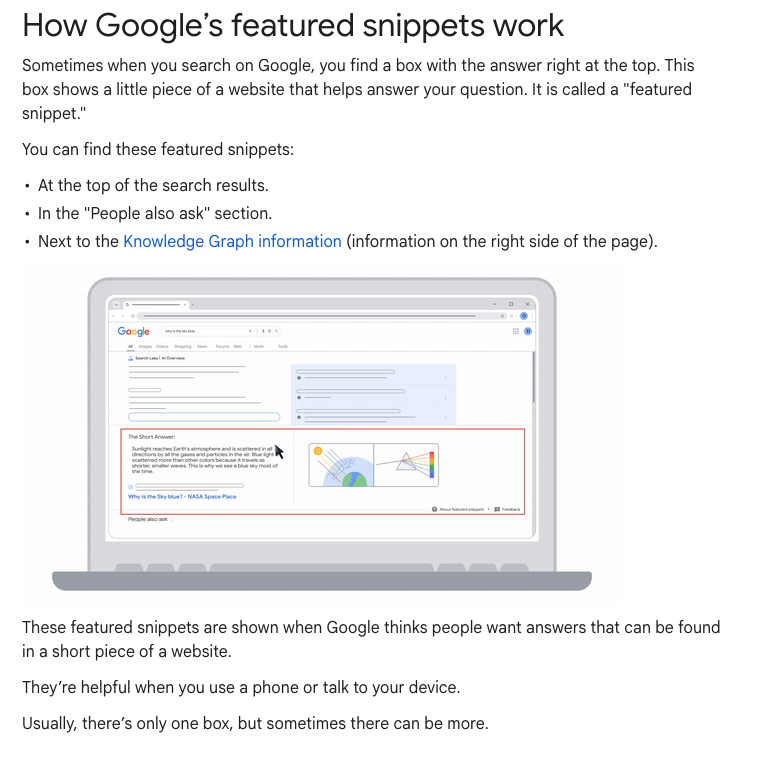
The content inside the orange box is the Google Featured Snippet
4. Leveraging AI Tools for SEO
AI doesn’t have to replace your creativity. Consider these tools as your allies:
- Content Creation Tools: Platforms like Notion, Jasper, ChatGPT, Claude, or Copy.ai assist in drafting ideas or outlines, saving you time while maintaining your voice.
- Analytics & Optimization: Utilize tools like SEMrush or Ahrefs to analyze keywords, backlinks, and domain authority effectively.
- Predictive Analytics: Use AI-driven insights to forecast trends in search behavior, helping you to pivot your content strategies proactively.
5. Measuring Your SEO Success
To ensure your SEO efforts are effective, it’s crucial to measure the right metrics:
- Organic Traffic: Track changes in traffic from organic search to see how your optimization efforts are performing.
- Bounce Rates: A high bounce rate may indicate that your content isn’t connecting with its audience. Pinpoint the problem areas and adjust your strategy.
- Conversion Rates: Ultimately, the goal of SEO is to drive conversions. Whether that’s leads, sales, or another KPI, monitor how well your traffic turns into tangible outcomes.
6. The Future of SEO in an AI World
As AI evolves, so will SEO tactics and strategies. Staying ahead of emerging trends and technological advancements will be critical. Focus on delivering high-quality,
unique content that supports your brand promise and can’t be replicated by AI. Maintain authenticity in your brand messaging and embrace the changes rather than resist them.
So, What Next?
SEO for an AI-dominated landscape is less about “bypassing” AI and more about becoming an indispensable source that AI and human users rely on. Instead of producing generic, easily summarized content, your strategy should focus on strengthening your brand’s authority, offering unique value, and optimizing for new forms of search interaction.
In summary, mastering SEO in an AI-dominated landscape revolves around enhancing your E-E-A-T while deploying techniques that prioritize value-driven content. By focusing on unique insights and leveraging technology appropriately, you can position yourself as a trusted source for both human users and AI systems.
It’s your unique value and those authentic experiences that set you apart in a sea of sameness and generic content.
Not happy with your SEO positioning? Schedule a complimentary consultation with me today to explore how you can optimize your SEO strategy for an AI-driven future.